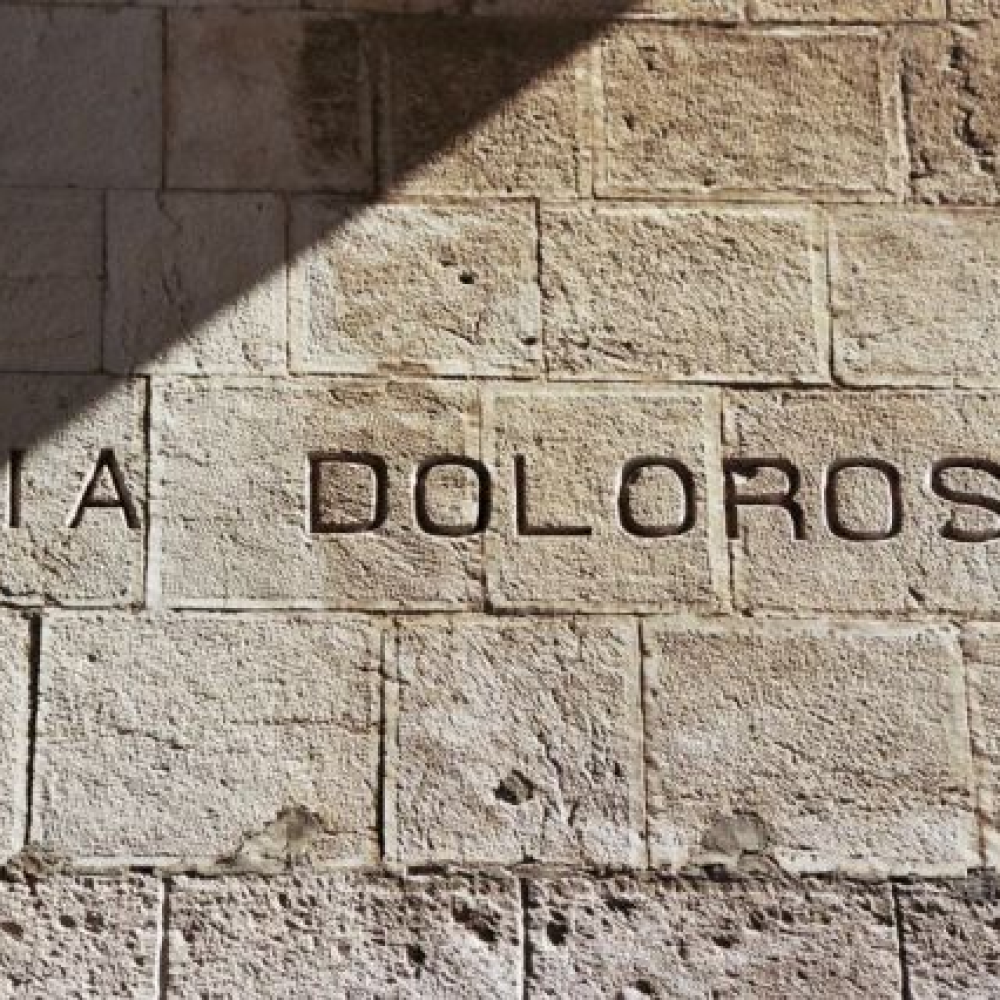
The Via Dolorosa is a processional route in the Old City of Jerusalem. It represents the path that Jesus would have taken, forced by the Roman soldiers, on the way to his crucifixion. The winding route from the former Antonia Fortress to the Church of the Holy Sepulcher — a distance of about 600 meters (2,000 feet) — is a celebrated place of Christian pilgrimage. The current route has been established since the 18th century, replacing various earlier versions. It is today marked by nine Stations of the Cross; there have been fourteen stations since the late 15th century, with the remaining five stations being inside the Church of the Holy Sepulcher.
Christian pilgrims who take part in the "Via Dolorosa" ("Way of the Cross") in Jerusalem follow a route of 14 stations that have been used since the time of the Crusades. Members of the Order of St. Francis, the religious community that oversees custody of the Christian sites in the Holy Land, lead the Stations of the Cross every Friday afternoon along the Via Dolorosa.
The 14 station of the cross:
 Holy Land Bible Tours.